
How do I care for and maintain my wooden outdoor signage?
Danish Oil vs Premium Osmo Oil – Which Finish is Right for You?
An oak sign is built to last. Whether it's welcoming visitors to your home, marking a business entrance or commemorating a special place, oak is one of the most durable and characterful timbers available for outdoor use.

Like all natural materials, however, oak continues to respond to its environment. Sunlight, rain and seasonal weather all influence how the timber looks over time.
The good news is that this isn't something to worry about—it's simply part of owning a beautiful natural product.
The key question isn't "How do I stop my sign ageing?" but rather:
"How would I like my sign to age?"
Some customers love the distinctive silver-grey appearance that oak naturally develops, while others prefer to preserve the warm honey tones of freshly machined timber.
The guide below will help you decide which finish is best for your sign, how to maintain it and what to expect as it ages.
How to Choose the Right Finish

Whether you choose Danish Oil or Premium Osmo Oil depends on three simple questions:
- Is your sign indoors or outdoors?
- Would you like your oak to weather naturally or retain its warm colour?
- How often are you happy to carry out maintenance?
There's no wrong answer—just the finish that's best suited to your preferences.
What Are the Biggest Threats to an Outdoor Oak Sign?
Oak is naturally durable and perfectly suited to outdoor use, but every sign is exposed to the elements throughout the year.
Understanding what affects the timber makes it much easier to choose the right finish and keep your sign looking its best.
Sunlight (UV)
Sunlight is responsible for the biggest visible change to oak.
As ultraviolet light breaks down the surface tannins within the timber, the warm golden colour gradually fades into a beautiful silver-grey patina.
This is completely natural and doesn't mean your sign is deteriorating.
If you'd like to preserve the original colour for longer, Premium Osmo Oil offers enhanced UV and weather protection.
Rain and Moisture
Although oak naturally resists decay, rain causes the timber to absorb and release moisture throughout the seasons.
This natural movement can occasionally lead to small surface checks or hairline splits.
These are a normal characteristic of solid oak and don't affect the strength or lifespan of your sign.
Keeping your chosen finish topped up helps slow moisture absorption and reduces weathering.

Dirt, Moss and Algae
Signs installed beneath trees or in shaded areas may gradually collect dirt, algae or moss.
Cleaning the surface occasionally using warm water and a soft brush before reapplying your finish will keep the timber looking fresh.
Avoid pressure washing, as it can damage the timber fibres.
Frost and Seasonal Weather
Oak naturally expands and contracts as temperatures change throughout the year.
Repeated freezing, thawing and heavy rainfall all contribute to the natural ageing process, making periodic maintenance worthwhile for signs installed in exposed locations.
Natural Ageing
Perhaps the biggest "threat" isn't really a threat at all.
One of oak's greatest qualities is how beautifully it matures.
Many customers intentionally choose oak because they love the soft silver-grey appearance it develops over time, while others prefer to maintain the rich golden tones for as long as possible.
Your choice of finish simply helps determine which path your sign follows.
Benefits of an Oak Sign vs. a Metal Sign

Aging Signs: Oxidation vs. Rust
Environmental Impact: Renewable Resource and Sustainable Sourcing
Carbon Neutrality and Ground Sequestration
The Look: Natural, Rustic, and Welcoming

Danish Oil or Premium Osmo Oil?
Both finishes protect your sign, but they're designed with different priorities in mind.
Danish Oil
Danish Oil is a penetrating finish that enhances the natural grain of oak while ps quick and easy to apply, making it ideal for customers who are happy to refresh the finish periodically as part of their sign's ongoing care.
Many customers also choose Danish Oil to give their sign initial protection before allowing the oak to weather naturally to its characteristic silver-grey colour.
Best suited for:
- Customers who enjoy maintaining natural timber
- Those happy to reapply the finish periodically
- Signs that will eventually weather naturally
- Interior signs
Need everything in one place?
Our Danish Oil Care Kit includes everything you need to apply and maintain your sign, making it easy to refresh the finish whenever required.
👉 Link to Danish Oil Care Kit providing reliable protection against the elements.

Premium Osmo Oil
Premium Osmo Oil is a high-performance hardwax oil that combines the natural appearance of an oil finish with enhanced surface protection.
It helps preserve the warm appearance of freshly machined oak while providing greater durability and requiring less frequent maintenance than traditional Danish Oil.
It's an excellent choice for customers looking for a longer-lasting finish with reduced upkeep.
Best suited for:
- Retaining the warm colour of oak
- Highly exposed outdoor locations
- Customers wanting less maintenance
- Long-term protection
Our Premium Osmo Oil Care Kit provides everything needed to clean, maintain and refresh your sign, helping to keep your oak looking its best for years to come.
👉 Link to Osmo Oil Care Kit providing reliable protection against the elements.
Want Your Oak to Weather Naturally?
One of the most common questions we receive is:
"Is something wrong with my sign? It's turning grey."
The answer is no.
Oak naturally develops a silver-grey patina when exposed to sunlight and weather.
This process has been admired for centuries and is one of the reasons oak is so popular for traditional homes, country properties and coastal locations.
If you love this weathered appearance, you don't need to continually restore the original colour.
A light application of Danish Oil when your sign is first installed provides initial protection while still allowing the timber to develop its natural character over time.
How Often Should I Maintain My Sign?
All outdoor timber benefits from occasional care, but how often depends on the finish you've chosen and how exposed the sign is.
As a general guide:
|
Finish |
Maintenance |
|
Danish Oil |
Every 6–18 months depending on exposure |
|
Premium Osmo Oil |
Every 1–2 years depending on exposure |
Rather than following a strict schedule, inspect your sign every few months.
If the timber begins to look dry or water no longer beads on the surface, it's time to refresh the finish.
Using the appropriate care kit makes this process quick and straightforward.

How to Apply Danish Oil
Applying Danish Oil couldn't be simpler.
- Ensure the timber is clean, dry and free from dust or dirt.
- Stir the oil thoroughly before use.
- Apply a thin, even coat using a lint-free cloth or natural bristle brush.
- Work with the grain of the timber.
- Leave the oil to penetrate for around 10–15 minutes.
- Wipe away any excess with a clean cloth.
- Leave to dry before applying a second coat if required.
A little and often is the best approach. Regular light maintenance is much easier than restoring heavily weathered timber.
Everything you need can be found in our Danish Oil Care Kit.
How to Apply Premium Osmo Oil
Premium Osmo Oil is just as straightforward to apply, but because it's a hardwax oil, less is more.
- Ensure the timber is clean and dry.
- Stir thoroughly before use.
- Apply a very thin coat using a brush, cloth or microfibre roller.
- Work with the grain.
- Avoid applying too much product—thin coats give the best finish.
- Allow the first coat to dry completely before applying a second coat if required.
- Leave the finish to cure fully before exposing the sign to rain.
Because Premium Osmo Oil provides enhanced protection, you'll generally find yourself maintaining your sign less frequently.
Our Premium Osmo Oil Care Kit (coming soon) will include everything required for future maintenance.
Wall Mounted or Installed on Posts?
How your sign is installed also affects future maintenance.
Wall-mounted signs are usually straightforward to remove whenever they need refinishing.
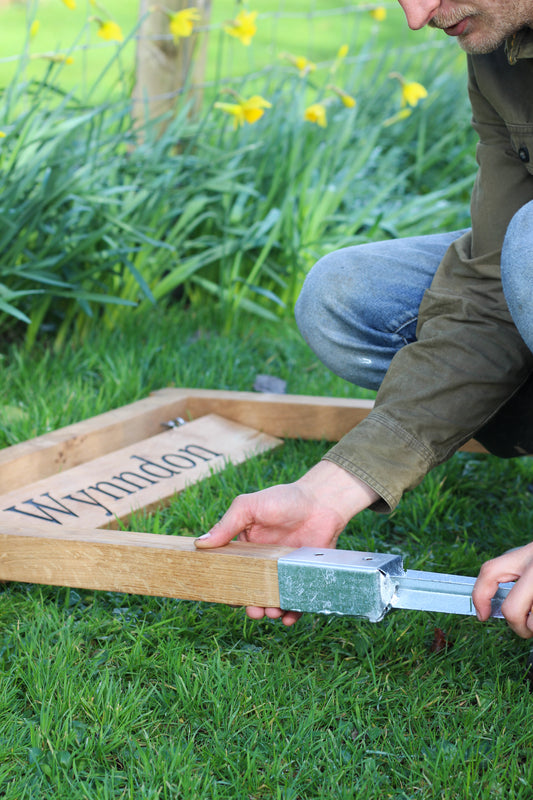
For signs installed on timber posts, we recommend using Ground Spikes.
Ground spikes:
- Make installation easier.
- Add additional height where required.
- Keep timber clear of standing water.
- Allow the sign to be removed easily for future maintenance.
Being able to remove your sign without digging out posts makes periodic maintenance significantly simpler.
👉 Read our Ground Spike installation guide and watch the step-by-step installation video.

Why Choose Oak Instead of Metal?
Unlike metal, every oak sign is completely unique.
Each piece has its own grain pattern, colour variation and natural character, ensuring no two signs are ever identical.
Over time, oak develops even more personality, whether you choose to embrace the natural silver-grey patina or preserve its warm appearance with regular maintenance.
With the correct care, an oak sign can continue looking beautiful for decades.
Frequently Asked Questions
"Can I leave my oak sign untreated?"
Yes.
Oak can be left completely untreated if you're happy for it to weather naturally.
It will gradually develop a silver-grey patina while remaining structurally durable outdoors.
"Will my sign crack?"
Small surface checks and hairline splits are a completely natural characteristic of solid oak.
These occur as the timber expands and contracts with seasonal moisture changes and don't affect the strength of the sign.
"Can I change from Danish Oil to Premium Osmo Oil later?"
Yes! It is possible to change from Danish Oil to Premium Osmo Oil when your sign needs its next treatment.
Before applying Osmo, the existing Danish Oil finish needs to be thoroughly cleaned and properly prepared so that the new oil can adhere correctly. Depending on the condition of the existing finish, this may involve lightly sanding the surface to remove any remaining coating and then ensuring the timber is completely clean, dry and free from dust.
Osmo recommends carrying out a small test application first, particularly when applying their products over an existing finish. Once the surface has been suitably prepared, the Osmo oil can be applied in thin, even coats following the manufacturer's application instructions.
Our Recommendation
The best finish isn't simply the one that offers the highest level of protection—it's the one that suits how you'd like your sign to look and how often you're happy to maintain it.
If you enjoy the natural ageing process of oak or don't mind refreshing the finish from time to time, Danish Oil is an excellent choice.
If you'd rather preserve the warm colour of your oak for longer while reducing ongoing maintenance, Premium Osmo Oil offers enhanced durability and longer-lasting protection.
Whichever finish you choose, a little care goes a long way.
Keeping your sign clean, inspecting it periodically and refreshing the finish when needed will ensure your oak sign continues looking beautiful for many years to come.
Browse our signage collection here -->
Thank you for supporting our small business!
Elenya and Rheece x